

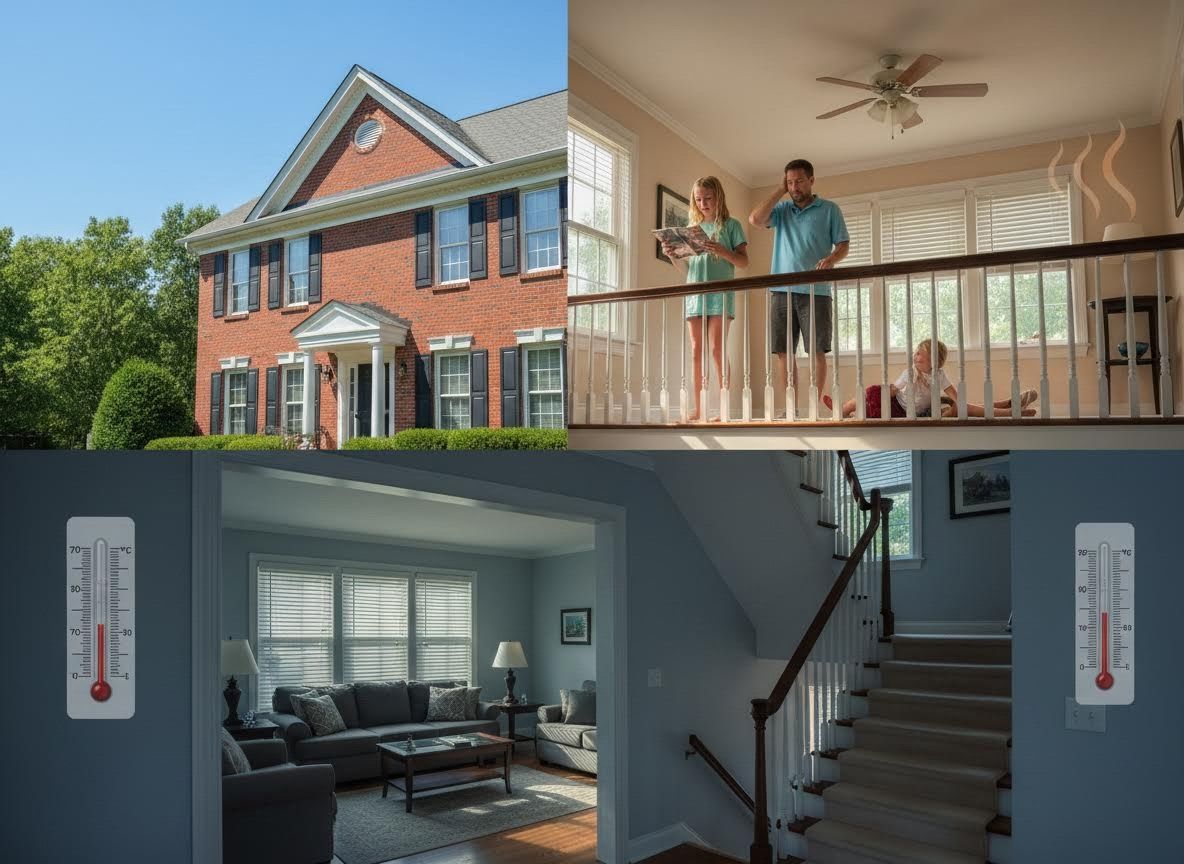
It's a familiar summer dilemma for many homeowners in Worcester County: while your first floor feels perfectly cool, the upstairs of your charming colonial home turns into an oven. This common issue isn't just an inconvenience; it points to underlying factors affecting your home's energy efficiency and comfort. At Advanced Energy Concepts, we understand that comfortable living spaces don't happen by accident, and we're here to explain why your second floor might be feeling the heat more than the rest of your home.
The Natural Tendency of Heat: The Stack Effect
One of the primary culprits behind a hot second story is a fundamental principle of physics: heat rises. Warm air is less dense than cool air, causing it to naturally ascend. In multi-story homes, particularly older colonial designs, this phenomenon is often amplified. Warm air from your first floor naturally migrates upwards, getting trapped on the second floor and in the attic. This creates what's known as the "stack effect," where warm air continuously accumulates upstairs, making it significantly warmer than the lower levels, even with your air conditioning running.
Inadequate Insulation and Air Leaks
Another significant factor contributing to an uncomfortably warm upstairs is insufficient insulation and air sealing. Many older homes, including colonials, may have outdated or inadequate insulation in their attics and walls. This allows heat from the scorching summer sun to easily penetrate your home's envelope. Furthermore, tiny cracks and gaps around windows, doors, utility penetrations, and even in your home's foundation can act as pathways for hot outside air to infiltrate. These air leaks, combined with poor insulation, create a constant battle against the summer heat, making your second floor especially vulnerable.
HVAC System Sizing and Zoning Challenges
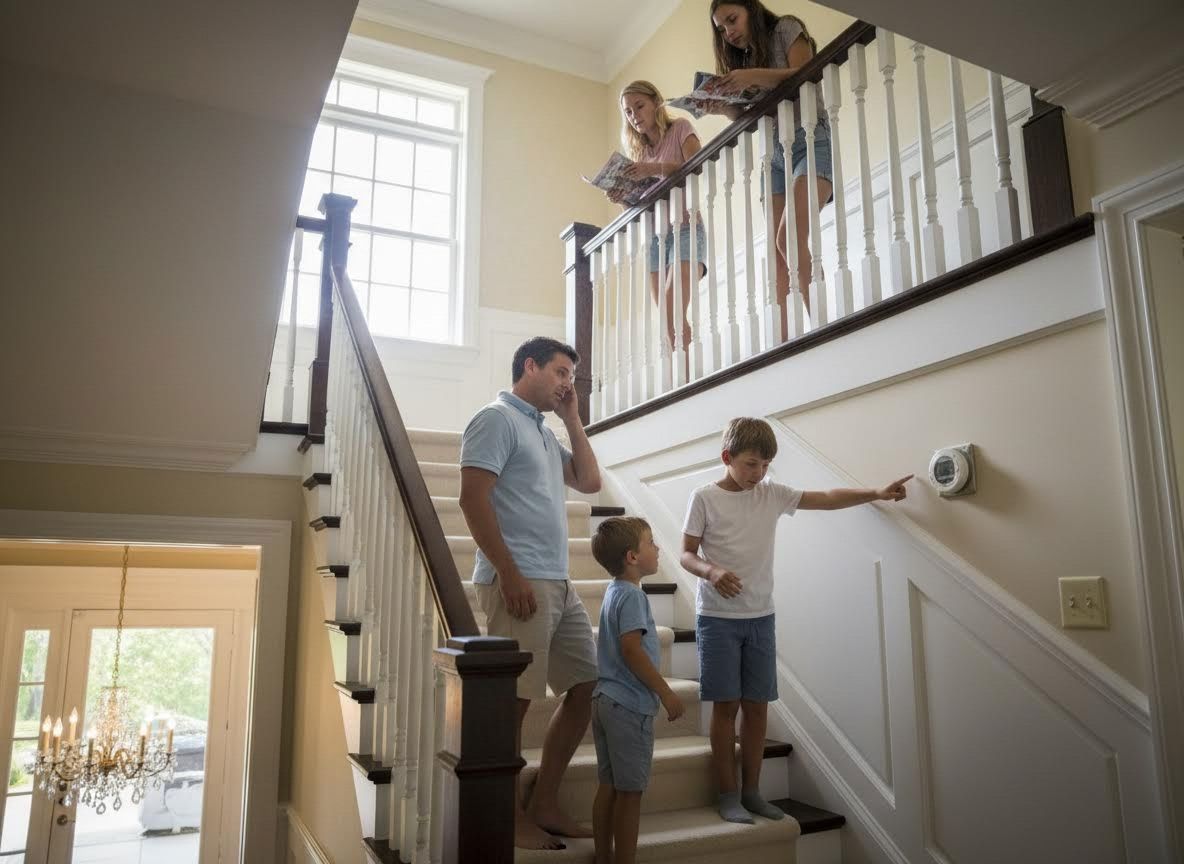
The effectiveness of your air conditioning system plays a crucial role in maintaining consistent temperatures throughout your home. Often, HVAC systems in older or even newer homes are not properly sized to handle the unique heat load distribution of a multi-story house. An undersized system will struggle to cool the entire home evenly, with the upstairs usually bearing the brunt. Additionally, many homes lack proper zoning, meaning a single thermostat on the first floor controls the entire house. Without zoning, the system can't efficiently direct more cooling to the hotter areas upstairs, leading to imbalances. Advanced solutions like zoning systems can provide targeted comfort, allowing you to control temperatures in different areas independently.
Ducts and Direct Sun Exposure
Beyond the structural and system issues, two other elements can exacerbate the problem: your ductwork and sun exposure. If your home's ductwork runs through unconditioned spaces like the attic, and it's not properly sealed or insulated, cool air can be lost to the attic heat before it even reaches your upstairs vents. This means your system works harder for less effective cooling. Secondly, windows, especially those facing south or west, directly invite sunlight and radiant heat into your home. The cumulative effect of several windows on the second floor can significantly increase the heat gain in those rooms, making them feel even hotter.
A sweltering second floor doesn't have to be a permanent fixture of your Worcester summer. Understanding the reasons behind this common issue is the first step toward a more comfortable home. Our experienced technicians are dedicated to thoroughly assessing your unique home environment and providing honest, tailored recommendations, whether it's optimizing your existing system or exploring advanced, energy-efficient solutions. To discover how you can achieve balanced comfort throughout your home, learn more about our comprehensive HVAC diagnostic and improvement services.